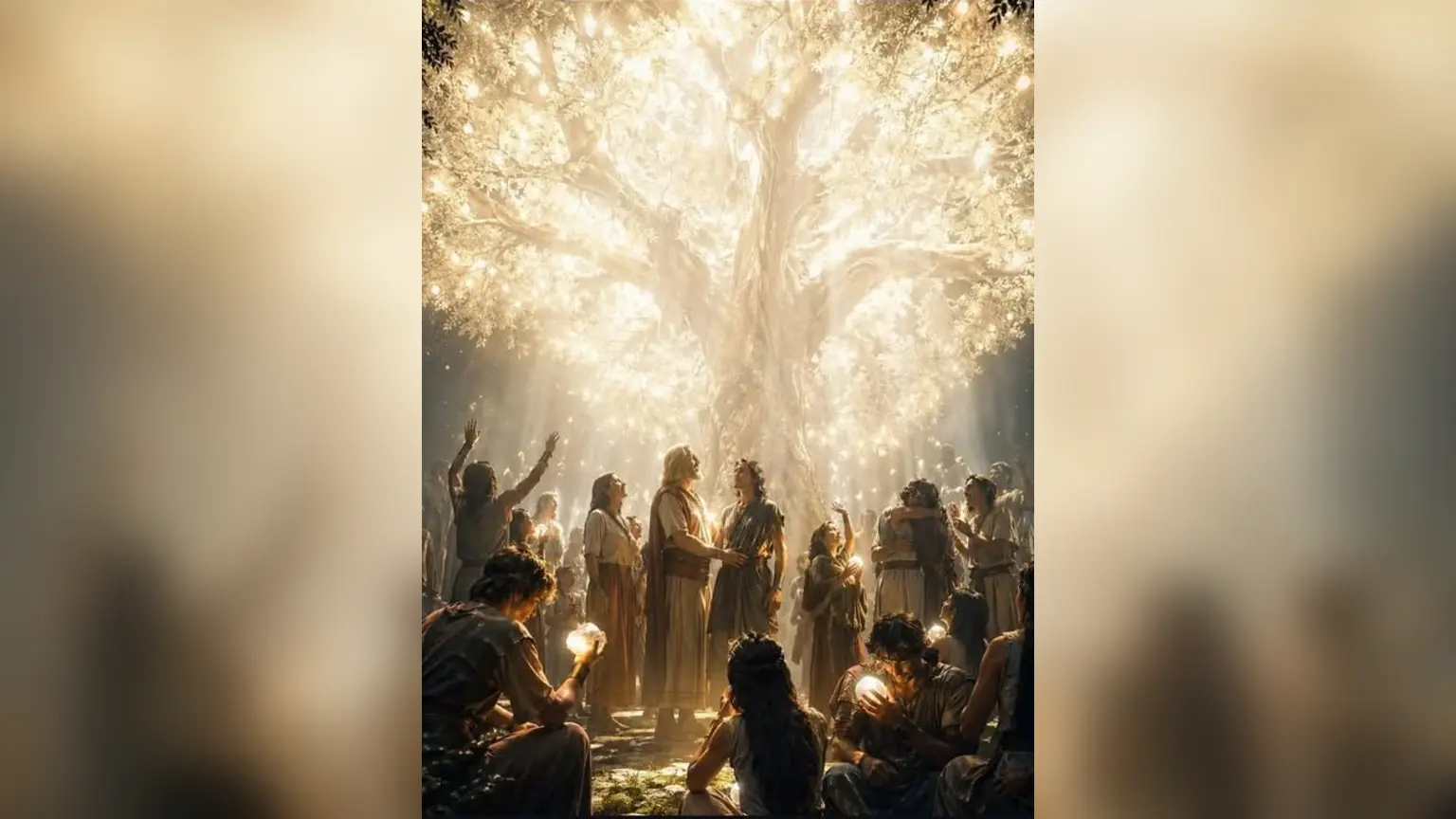
I've been thinking about the Tree of Life. In one painting of it, people are gathered around the tree, eating its fruit, holding on to each other. Nobody looks worried about who got there first, who had the hardest path, or who deserves to be there. They're just there together, and I long for that more than I can easily say.
I need to go back to church, and I know it. Going without my wife isn't easy. There's another reason too, and I'm less comfortable admitting it -- I don't always like who I am when I come home.
It happens afterward, once I'm home and catch an attitude in myself I can only call holier than thou. I don't want to be that man. So the examination starts. Was I proud? Was I judging somebody? Did I go because I love God, or because I needed to reassure myself that I'm righteous?
I can examine my own motives almost without end, and it's a burden.
When looking inward stops helping
Self-awareness is supposed to be a virtue, and I believe it is. Without it I'd never see my faults, repent, or grow. But I've started to suspect there's a point where it stops doing any good.
Once every good intention has to be searched for hidden pride, even wanting to be humble becomes suspect. I helped someone, and then I wonder whether I did it out of love or to be appreciated. I built something worthwhile, and then I wonder whether I wanted to make a difference or wanted the credit. If I enjoyed the credit, I wonder whether that cancels the good. The questions don't run out.
I felt a real peace on November 4. It lasted about a day, and by the next day I was writing about how fleeting peace is. I honestly don't know how much of that comes from my circumstances and how much comes from my refusing to leave myself alone.
Wanting to be remembered
Which brings me to Real Prosperity.
I've spent most of my life building things and chasing ideas, and I've had enough setbacks to know that effort and success don't come in proportion. And yes, I'd like some recognition. There, I said it. I'd like to know that something I made mattered -- that the years, the disappointments, the sacrifices and the plain stubbornness added up to something. I doubt I'm the only one who wants that.
Real Prosperity puts that wish to an interesting test. The whole idea is that doing what's right should be good business -- that prosperity doesn't have to come from exploiting customers or employees or anyone else, and that people can prosper without somebody else having to lose. In my faith there's a name for the society that idea points toward. It's Zion, a people of one heart and one mind, with no poor among them.
A website and a stack of articles won't build Zion. They might add something small to the kind of thinking that makes a better society possible.
So I asked myself an uncomfortable question. Say Real Prosperity works. The ideas spread, businesses change, people's lives get better, and nobody remembers who started it.
I thought about it for a while, and my answer surprised me a little. As long as I knew it had happened, I'd count it a success. I'd like to see the fruit. My name doesn't have to be on the tree.
The one I do want
There is one acknowledgment I want more than any other. It's from the parable of the talents in Matthew 25:
Well done, thou good and faithful servant.
Those words have meant something to me for a very long time, and I want to hear them from the Savior. I'd want to hear them because I was faithful with what I was given. Money, a company and an audience have nothing to do with it.
There's a trap in that too. I can turn even that hope into one more impossible standard. Have I done enough, suffered enough, overcome enough? And there I go again, measuring.
Maybe I've been reading the word well and skipping the word faithful. In the parable the servants were given different amounts. Their results were different, and the two faithful ones heard exactly the same words. The Lord didn't ask for identical results. He asked for faithfulness, and I need to understand that better than I do.
The work and the worker
If Real Prosperity becomes influential, wonderful. If it helps a few business owners rethink how they treat their customers, that's worth doing. If someone else takes these ideas and does far more with them than I could, I hope I'll have the humility to be glad.
If none of that happens, I still owe it to do what I believe is right with what I have.
And I have responsibilities much closer to home: a wife to love, people to treat kindly, mistakes to own and a Savior to follow. It would do no good to spend my life arguing for a more loving society while getting less loving toward the person I share a home with. It would do no good to preach against exploitation while using my own sacrifices as proof that I'm more spiritual than someone else. Those are real questions, and they deserve answers. Condemning myself over and over doesn't answer them.
I don't want Real Prosperity to become a monument to me. I don't want it to become one more stick to beat myself with for not having done enough. I want it to be useful, and I want to be useful.
Enter into the joy
There's a part of that verse I've given too little attention. The commendation doesn't stop at "well done." It goes on:
Enter thou into the joy of thy lord.
Joy. Not another assignment, another audit of my motives, or another list of what I could have done better.
I wonder whether I've spent so long getting ready to hear the first half that I've neglected the second. Maybe I don't have to wait until the end of my life for some of the joy that comes from trying to follow Christ. I could go to church without appointing myself the judge of my own performance, and come home and just love my wife. And I can build Real Prosperity, hope it works, enjoy whatever good comes of it, and accept that wanting to see results doesn't make me proud.
I'll still make mistakes and still need to repent, and I'll keep wrestling with my motives. But I don't believe the Savior meant discipleship to be an endless prosecution of the disciple. His invitation was to come unto Him and find rest, and I need to learn how to accept it.
When I look at that painting of the Tree of Life again, I notice the people are gathered around the fruit, and nobody is holding up a certificate of righteousness. They're rejoicing, and I want to be among them. I'm starting to understand that getting there depends on whose love the fruit stands for, far more than on anything I've done.
When my work here is done, whatever comes of it, I hope to hear the words I've wanted all my life, and then, maybe for the first time without holding anything back, to enter into His joy.
Comments
No comments yet.